
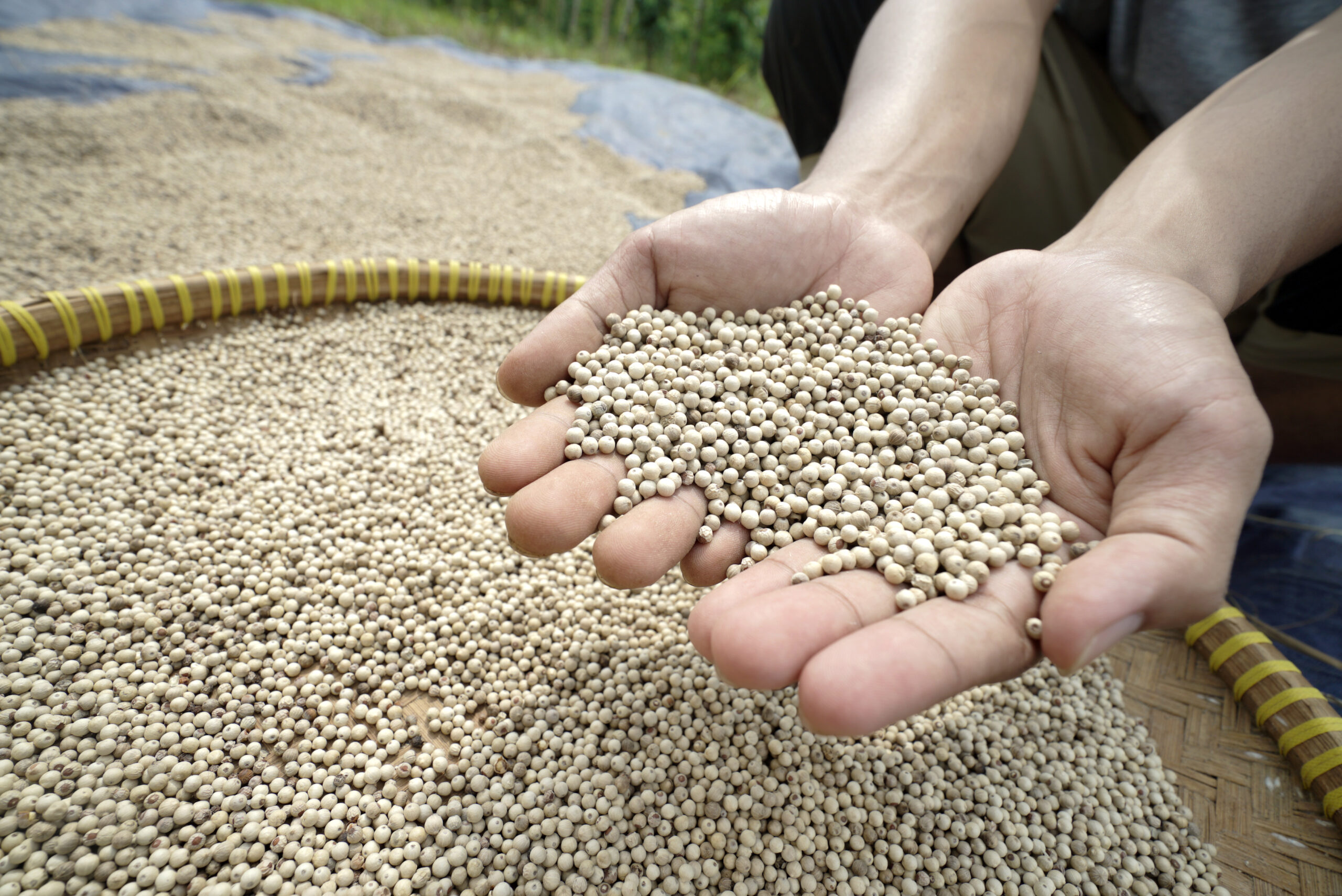
Bangka Belitung · Piper nigrum L.
Muntok White Pepper — the world's benchmark.
Exported continuously since 1498 through Muntok port — one of the oldest documented spice supply chains in the world.
Muntok commands three times the market price of commodity white pepper — justified by GI status, terroir, and process.
Registered Indonesia 28 April 2010 (ID G 000000004). Recognised by the European Union. The champagne of white pepper.
A Spice Worth Fighting For
The name “Muntok” is not a variety. It is a place — and the story of how a port town gave its name to the world's most coveted white pepper is inseparable from the history of global trade itself.
“This product so intrigued the Dutch that they went on to monopolize the trade of this most sought-after commodity, which they called Muntok after the harbour from which it was transported beginning in the 18th century.”
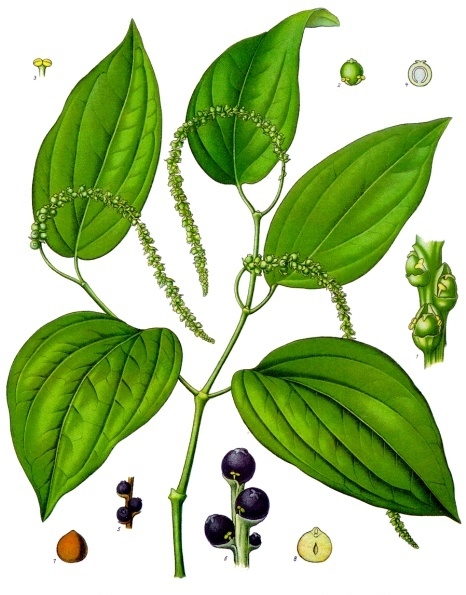
Bangka Island's unique laterite soils — iron-rich, mineral-dense — give Piper nigrum grown here a piperine concentration and aromatic complexity found nowhere else on earth.¹ When the VOC formalized a pepper agreement with the Kingdom of Palembang in 1710, they were codifying a monopoly over one of the world's most sought-after commodities.⁴ The spice took the port's name — and never gave it back.
One of the first Indonesian agricultural products to achieve EU-recognised GI status. Registered 28 April 2010 (ID G 000000004). Verified origin, verified process, verified quality.
That heritage is not guaranteed. Aggressive tin mining erodes farmland across Bangka Belitung. Fertilizer subsidies were withdrawn by government regulation in 2022, pushing input costs beyond what many smallholder families can sustain.⁵ Every kilogram sourced responsibly is a vote for the spice's survival.
Only Ripe. Only Retting. Only Washed Twice.
The difference between commodity white pepper and Muntok begins on the vine — and is decided through a sequence of steps no shortcut can replicate.
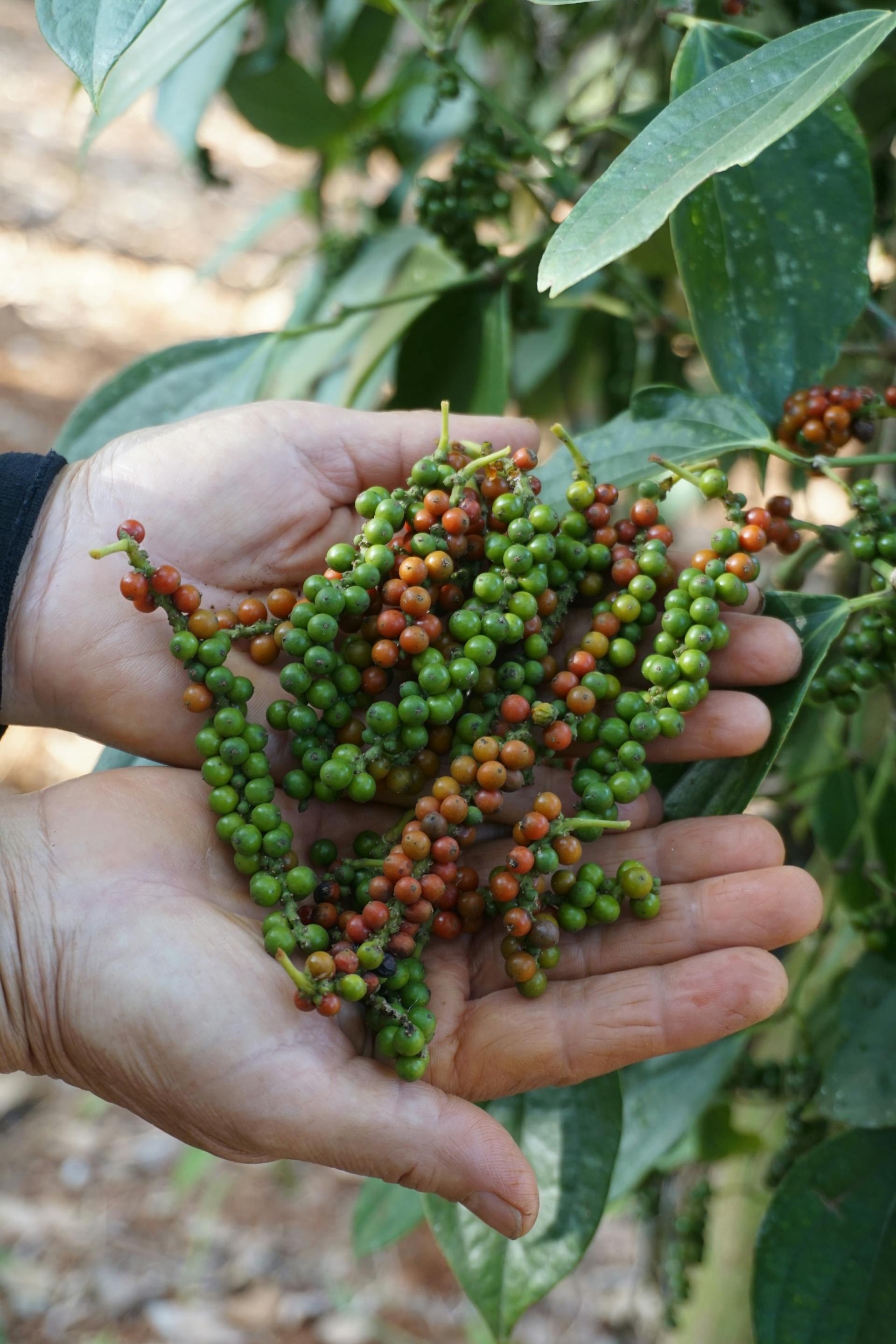 Ripe berries — harvested at peak maturity
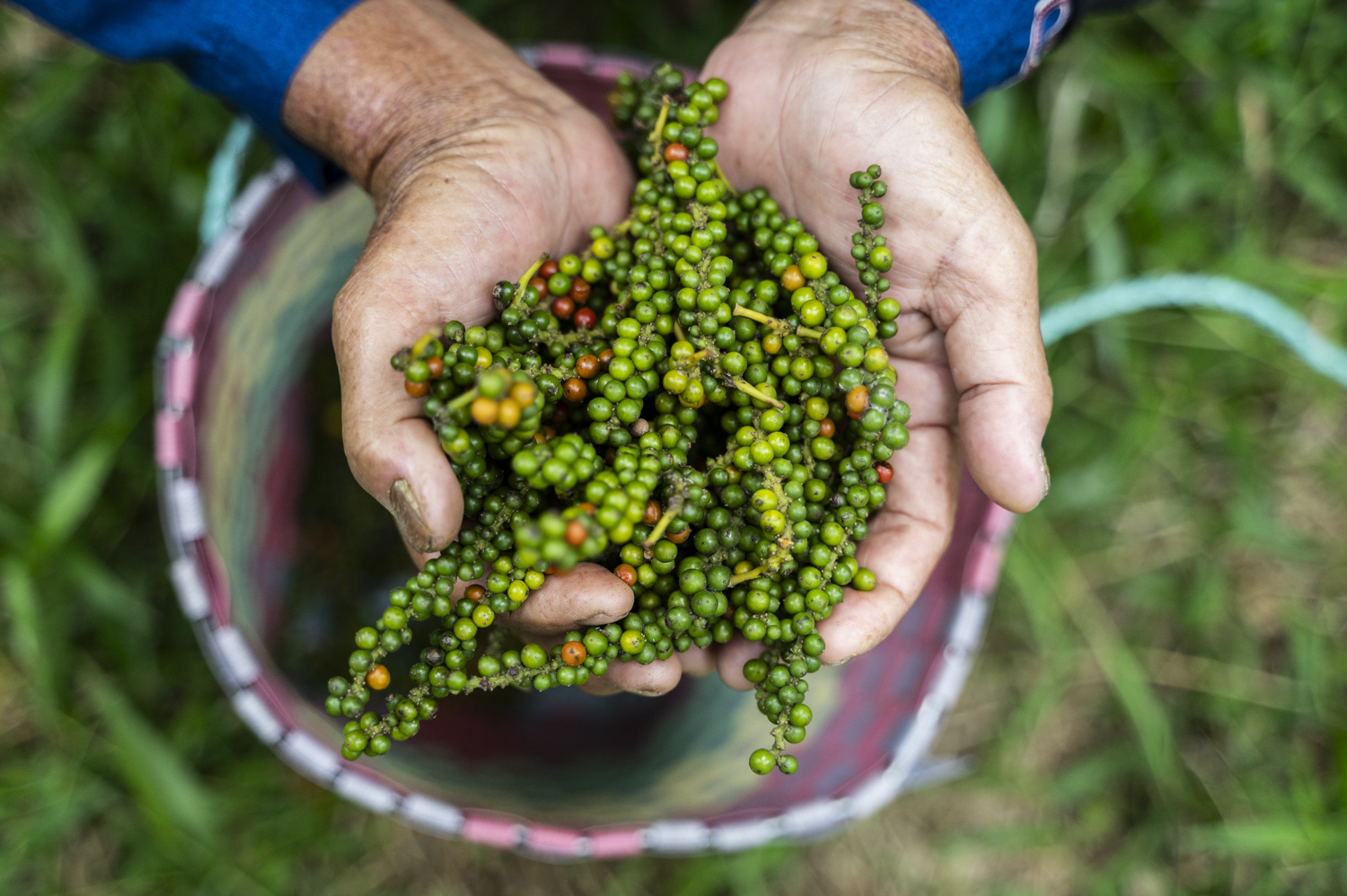 Hand harvest — Bangka Island
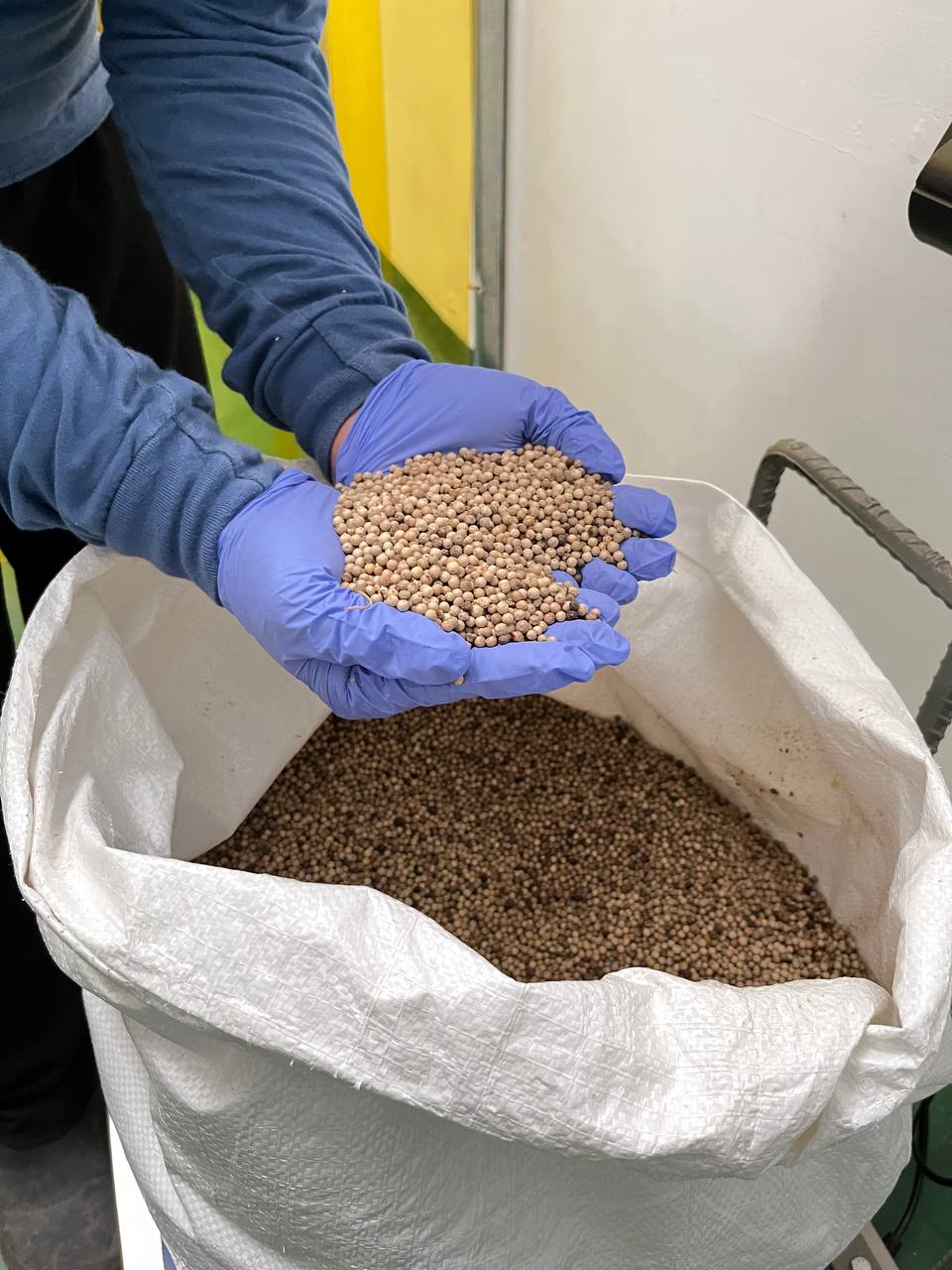 Quality inspection — Cinquer facility
Ripe-only harvest
Where black pepper is picked green, Muntok waits. Farmers harvest only fully ripe, red berries — a selective process that demands more labor but results in higher piperine concentration and a more developed, complex flavor profile. Bulk density minimum 600 g/L confirms full maturity at harvest.
Retting in flowing water
Ripe berries are submerged in slowly flowing water for several days in the traditional retting process. The current gently dissolves the outer hull without the fecal off-flavors common in stagnant-water processing — giving Muntok its distinctively clean, minerally base note.
Sun-drying under the equatorial sky
After retting, the pale inner seeds are sun-dried under the equator's intense, consistent heat — bleaching them to a signature ivory white while preserving volatile oil content (min 1.5%). These aromatic compounds make Muntok unmistakable from the first grind.
Double washing — the Cinquer standard
Our specification adds a second rigorous washing stage beyond the standard process. This removes residual hull particles, reduces microbial load, and produces the cleaner ivory appearance that distinguishes export-grade Muntok. Result: absent E. coli and Salmonella, TPC within food-safe limits.
Sharp. Earthy. Invisible.
Muntok White Pepper delivers a clean, direct heat with characteristic earthy depth. It seasons without speckling — the spice that disappears into a dish while making everything taste more like itself.
Spicy, warm, mineral — with characteristic fermented depth from the retting process and faint floral top notes that open on grinding.
Potent and direct. Min 4% piperine delivers sharp, piercing warmth that builds gradually and lingers. No roasted bitterness, no dark visual trace.
Sarawak is mild and slightly sweet. Muntok is bolder — more assertive, higher heat, greater aromatic complexity. The preferred choice for rich, heavy dishes.
Signature applications
Double Washed — Export Grade
Every lot is verifiable through our traceability system. Traditional process authenticity combined with export-grade food safety — the specification we sell against, issued per lot to wholesale buyers.
| Parameter | Specification | Why it matters |
|---|---|---|
| Odor | Spicy, fermented aroma | The fermented note is a quality marker — not a defect. It distinguishes traditional retting from chemical processing. |
| Color | Ivory white | Natural sun-bleaching. No chemical whitening. Ivory is the correct color for authentic Muntok. |
| Piperine | Min 4.0% | The primary heat compound. 4%+ confirms ripe-berry harvest and traditional process. |
| Volatile Oil | Min 1.5% | Responsible for aroma complexity. Retained through gentle retting and whole-grain sun-drying. |
| Bulk Density | Min 600 g/L | Dense berries confirm full maturity. Only ripe red berries are selected. |
| Black Berries | Max 4.0% | Low count confirms harvest discipline and processing consistency. |
| Light Berries | Max 1.5% | Underdeveloped or improperly soaked berries kept to minimum for uniformity. |
| Foreign Material | Max 0.8% | Strict cleaning standard for export-grade presentation. |
| Moisture Content | Max 12.0% | Prevents mold and preserves volatile oils during transit and shelf life. |
| E. coli | Absent | Result of Double Washed protocol. Ready for food-safe use in any B2B or retail context. |
| Salmonella | Absent | Meets requirements for food manufacturing, restaurant supply, and retail. |
| Total Plate Count | Max 100,000 CFU/g | Within internationally accepted limits. The second washing stage is specifically designed to maintain this. |
| Sterilisation | Washed, not irradiated | Food-safe counts reached by double washing and steam, with no ionising treatment at any stage — so the volatile oils that carry the aroma are still in the berry when it lands. |
Trade & shipping terms
| Term | Detail | What it means for a buyer |
|---|---|---|
| Grade | DW / HPS | Double Washed and Hand Picked Selected — the two export grades we ship. The grade is named on the spec sheet issued with every lot. |
| HS code | 0904.11 | Pepper of the genus Piper, neither crushed nor ground. The heading a customs broker classifies the shipment under. |
| Origin | Bangka Belitung | Declared on the certificate of origin as Bangka Belitung, Indonesia. Muntok is a port before it is a grade — white pepper from anywhere else is not Muntok. |
| GI registration | ID G 000000004 | Registered 28 April 2010, recognised by the European Union. GI-certified origin is verifiable against a register, not asserted by a seller. |
| Certification | HACCP · Halal | HACCP food-safety certification and halal certification, held alongside the Geographical Indication above. Copies on request. |
| Sold as | By the metric ton, FCL | Cinquer is an Indonesian pepper exporter supplying wholesale by the full container load, against a quotation. Sample lots on request. |
| Documents | Issued per shipment | Spec sheet — the product datasheet — issued per lot, plus certificate of origin and phytosanitary certificate, travelling with every container. |
| Traceability | Batch record | Each lot carries a batch record traceable to the farming plot, with the container seal number recorded against it. |
Regenerative Sourcing — Not Just a Label
Cinquer is an Indonesian pepper exporter. We source Muntok White Pepper through direct partnerships with smallholder farming families across Bangka Belitung Island — traceable to origin, processed to export specification, and priced to give farmers a sustainable return.
In a region where tin mining encroachment and the withdrawal of fertilizer subsidies have pushed many families away from pepper cultivation, our supply chain is designed to make it worth staying. Every order placed is a direct contribution to the survival of the world's most storied white pepper tradition.
We supply wholesale by the container, against a quotation. Every shipment leaves with its spec sheet, certificate of origin and phytosanitary documents, and the container seal recorded in the batch record. Sample lots on request.
Research References
- 1.White Pepper traded through Muntok Port since 1498. muntokwhitepepper.net ↗
- 2.Muntok commands 3× standard market price. spice.alibaba.com, 2026 ↗
- 3.GI registered 28 April 2010, ID G 000000004. Purnama et al., IOPscience 2020 ↗
- 4.VOC–Palembang pepper agreement 1710. Spice Trekkers, 2022 ↗
- 5.Fertilizer subsidy removed by Ministerial Regulation No. 10/2022. Kompas.id, June 2024 ↗